Thursday, 11 July 2013

Bo's 70th Birthday Party


Chorlton Irish Centre, Wed. July 10

I can’t believe that Bo is 70. Did he lie about his age just so that Bob Jones would organise this party for him, which, naturally, turned into a glorious celebration of Manchester grassroots music? If you can imagine The Last Waltz transported to Chorlton, you’re getting close to the spirit of Bo’s 70th Birthday Party. 

Me, I first encountered Bo as the lynchpin of the Helen Watson Band in the eighties. He goes back further than that. The senior black musicians who, earlier in the evening, jam to ‘St Thomas’ recall Andy Hamilton’s story (the Windrush generation, making music away from the public gaze, purely for their own pleasure).


That’s the great thing about tonight. In a music scene that has become more, not less segregated with time, Bo skips the genres and refuses to acknowledge divisions. Integration is the watchword, and it’s grand to see this meeting of generations and cultures: of rastas (they were one or two there) digging the primal rock of Spider Mike King or the goodtime blues of Victor Brox. Or, conversely, a teddy boy (great mutton chops he had too) grooving to some great live reggae. 

Bo is the catalyst, the bassist who brings it all together and unites the crowd, musicians and music-lovers alike, in a warm glow of affection. To my knowledge his name has never been linked to a surname. He is always and forever simply Bo.

Who was there? Oh, there were jazzmen, beat-group veterans, reggae musicians from ska to dancehall, first and second generation hippies and the afore-mentioned Ted. I spotted Clive Hunte, Ed Kainyek, Kirsty Almeida and Franny Eubank. And they didn’t even get to play, such was the wealth of talent on hand. 

Reader’s voice. Right, so who was there that did play? 

Well, saxophonist Dave Roberts was joined by a tenor-man I didn’t recognise, but he looked older than Iain Dixon and younger than Harold Salisbury. 

Reader’s voice. That narrows the field then.  [Bob Jones writes: "The other sax player is Neil Shawhulme, who amongst other things plays with Dougie James' Soul Train.]

And there was Victor Brox, who, of course, is a Manchester legend, and someone who has paid starvation wages to more than a few gathered at Chorlton Irish Centre tonight. Indeed, he was joined on drums by his old compadre from Blues Train, Ian Starr. He offered spirited blues anarchy in the patented Brox style, with a spot of staccato, declamatory trumpet (perhaps his most eccentric feature). John Ellis sidled to the keyboard to finesse the sound, and Dave Lunt offered acerbic guitar licks in the best Albert King style.


Spider Mike King now. Certainly too wild to ever consider music as a ‘career’ or ‘business’ or any of those other soul-shrivelling words. I haven’t seen Spider Mike since the fondly remembered days of The Carpenters Arms bandbox in the eighties. There I identified his spindly, freak-friendly electric guitar style as the source of his power. Tonight, he restricts himself to acoustic, and leaves the electric licks to others, but he is every bit as untrammelled and dangerous. So I can only conclude that edginess and charisma are inbuilt in his personality. 

Spider Mike was joined by Dave Garson on drums. Now I remember Dave as a dude with snake eyes, wise to the ways of the world and cool to the point of cynicism. I had to do a double-take to recognise him as the Old Man of the Mountains (shaggy grey beard and all). And back then he was only helping me print some flyers (he's the chief of Logoprint, a printers in Slade Lane): this was the first I'd seen him in action on sticks, and playing behind Spider Mike King too! It was rock ’n’ roll in extremis. 

Then a complete change of gears when the flute player Mat Walklate offered a rambunctious set of traditional Irish tunes. This was when dancing broke out in earnest. Then, all too soon, a grand finale of ‘Use Me’ for a full group powered by supreme funky drummer Myke Wilson.   

Praise is due to Anthony Haller, whose expert and versatile time-keeping kept commendable order. But whenever Bo strapped on his bass, we could literally feel the love. We were all there for his sake, and basked in his warmth and unassuming authority. But how is it that Bo, unlike the rest of us, refuses to manifest any sign of the ageing process? Three score years and ten? It can’t be right.


A nice pic of Bo, by Dom Dudill, fiddler of the parish.


Tuesday, 18 June 2013

In Search of a Song


picture by William Ellis 

Where do the songs come from? It's the eternal question, the one most asked of someone from the circle of performers at Oddfellows at the close of a song. Who wrote 'If I Had a Boat?' (I knew that one: Lyle Lovett.) Who wrote 'Killing the Blues'? (I'd forgotten that: Roly Salley.)

Ian Reynolds, impressed by the heart-breaking emigrant song 'Sailing Off to the Yankee Land', asked Donal Maguire if it was one of his own. "I've never written a song in my life," Donal replied. "No, it's…" (exaggerating the mouth shapes to make his point) "...a-non!" 

It was a good night at Oddfellows. John Ellis and Kirsty Almeida dropped by with Tom Davies, and some other musician friends. Usually this means that some recording has been going on at Ellis' home studio down the road, which often results in an impromptu post-studio performance at Oddfellows from unknown and unsuspected talents. In this case an Australian couple - Hat Fitz and Cara Robinson. He a wild man from the mountains (or the outback, I suppose); shaggy with a guitar. She with the strongest, purest voice this side of Hedy West. Cara and Kirsty duetted on 'Down to the River to Pray' from the O Brother Where Art Thou soundtrack, and it was a spine-tingling experience. 

Then Helen Howard, whose turn was next, spoke of being in a parallel Oddfellows in Cumbria last week, again with a folk session going on, and she would like to sing a song by one of the artistes who was there. She proceeded with 'A Thousand  Years Today' by Paul Metsers, whose best-known song is 'Farewell to the Gold', as heard on Penguin Eggs by Nic Jones. Actually, 'A Thousand  Years Today', on consideration, might be one of my least favourite songs of all time. It aims for the sublime - dissolving the barriers of time, and all that - and settles for the banal. It's a National Trust song at the end of the day. (Metsers comes from New Zealand, which is telling: New Zealanders tend to be disproportionately impressed by the sense of history embodied in stately homes.) 

And then John Howarth sang 'They Don't Write 'Em Like That Anymore'. A song where the deprived past comes to the aid of the deprived present, ‘They Don't Write 'Em Like That Anymore’ mourns the passing of the communal singsong of old by re-staging one in the here and now. And who wrote ‘They Don't Write 'Em Like That Anymore’? His name is Pete Betts, and I was surprised when one of my oldest and dearest friends, Mick McElvaney, currently resident in China, told me that Betts was  the brother of his ex-wife. One degree of separation, eh? 

Actually, you can tell it's a Middlesbrough song. The first verse is preoccupied with booze, the second gets scatological and is innocently racist (Jack, in a desperate bid to get to the toilet in time, falls in the coalhole and emerges in black face, singing 'Mammy'). All of these traits I associate with the seventies and Middlesbrough. 

The North West equivalent is another of Howarth's standbys, 'Ee, When I Were a Lad', which taps the same rich seam of working-class nostalgia. And who wrote 'Ee, When I Were a Lad'? Keith Hancock, who emigrated to the Far East and now lives in Saigon.

This quest for the song and the person behind the song is endless, inevitably involving a story behind the song, and then another song, or a person behind the person behind the song. Me, I would like to track down Stan Ellison to ask him about 'July Wakes'. Paul Graney - the subject of a projected article for Rock 'n' Reel - enters the story, but as a fixer or catalyst, an impresario almost, who matched author (Richard Pomfret) with composer Ellison. And Bill Leader wants to track down Stan Ellison to pay the royalties owed to him from the first Oddfellows album, which contains 'July Wakes' as sung by Ian Sidebotham. And who is Richard Pomfret? A little-known Lancashire dialect poet whose poem, 'July Wakes' Graney found in an anthology called My North Countrie, edited by Wilfred Pickles. And who is Wilfred Pickles? What, you mean you've never seen Billy Liar?   

Wednesday, 1 May 2013

Mopomoso: Evan Parker, Johns Russell and Edwards, Pat Thomas, Alison Blunt, Kay Grant, Alex Ward, Matt Wand and all


St Margarets, Manchester, April 30 

It was a scene that I'll cherish: Evan Parker standing outside the porch of St Margarets church looking for all the world like a priest of hip welcoming his flock, with chirruping birds adding to the bucolic charm. His flock, in this case, included the best improvisers from this generation and the one before, who had gathered under the banner of Mopomoso. This lovely parish church in the Manchester suburb of Whalley Range was the surreal venue of the last date of a national tour. 

The warm-up act, special to Manchester, were the Matt Wand Trio, comprising Wand himself, poised over a table-top of electronics like a boffin over his test-tubes, David Birchall, playing guitar in a refreshingly un-guitar-like way, and Richard Harrison, diamond hard on assorted percussion. It was the most convulsive and edgy music of the evening. Whatever else they were about, the Mopomoso musicians were not convulsive and edgy. Evan Parker, up next, has arrived via an unprecedentedly radical route to the stage of development that comes to great saxophonists in their maturity: he has become a fantastic balladeer, with a full, beautiful tone capable of conveying and inspiring deep emotion. This, without compromising any of the freshness and surprise of free jazz. John Edwards and John Russell provided a backdrop of strings: with Edwards' muscular bass giving momentum and propulsion to Russell's random scatterings and atonal scrapings on guitar. The music was more organic than chaotic, always with Evan Parker at the centre, still making discoveries and still inducing goosebumps with his circular fire-breathing. 

And that was only the first half in this feast of free, as rich in rampant creativity as Derek Bailey's Company gatherings, or those LMC weeks at Conway Hall I used to attend, or even the late lamented On the Outside festival in Newcastle. Clarinet and voice duo Alex Ward and Kay Grant embodied virtues supposedly banished from free jazz, such as subtlety, charm, and melodicism, weaving lines together in perfect tunefulness. The conventional classical maestro was consigned to the past by the string trio of Alison Blunt, Benedict Taylor and David Leahy, who thrive on instant, instinctive composing. This approach is much more open to the moment, as when double bassist David Leahy, on guard against conventional string trio harmonies, suddenly let rip with a bass flurry, and set the violin and viola scampering like agitated tadpoles. 

After so much pure pleasure, it was left to Pat Thomas to restore the reputation of free jazz for searching rigour. He was 'inside' in more senses than one, leaning into the piano frame and plucking the bass strings of adjacent notes, creating a dissonant rumblings. Harsh? Difficult? Not when the search resulted in low register cascades that emulated the electronica of drum 'n' bass by pure acoustic means. 

All the musicians (barring Matt Wand's trio and John Edwards) came together for the finale, and the greater size of the aggregation, if anything, made the music slightly more structured and well-calibrated. It was string-driven, with violin, viola, guitar and string bass to the fore, with a wordless voice and a clarinet pitching in, and Pat Thomas, still buried under the piano-lid, adding to the texture with scrapers and wood-blocks. Above all, and in a different tonal register from anyone, Evan Parker was more lyrical than less fearsome. 

The awareness that this beauty was only of the moment, or perhaps, more prosaically, that it was the last night of the tour, made for an almost tearful parting. I left with a very full heart, ready to embrace everyone in sight, musician and patron alike. 

Monday, 15 April 2013

A Rare Batch of Babel


A package of seven - seven! - CDs from cutting-edge label Babel arrived for review the other morning. I shall try to honour my side of the contract, and endeavour to play them all and pass on my impressions… 


Eyes of a Blue Dog 

Rise 

(Babel) 

Eyes of a Blue Dog are Rory Simmons (trumpet/guitar/electrons), Terje Evensen (trumpet/electronics) and Elisabeth Nygard (voice). The off-the-wall exoticism recalls Bjork, but the playfulness and charm of the original, alas, is replaced by unappealing earnestness which could become known as Eyes-of-a-Blue-Dogmatism. 


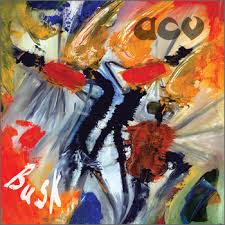
ACV

Busk 

(Babel) 

ACV take some of the uglier features of fusion - the shrill guitar, disassociated funk rhythms etc - rein in the excesses and somehow rearrange into beguiling shapes and novel structures. They turn on a hair between rarified and pell-mell and constantly dash the listeners' expectations. Bassist Andy Champion is a musical magpie and innovator all at once. His compositions - he wrote all but one of the compositions - are unpredictable and oddly beguiling. Those who only know Chris Sharkey through his work with trioVD may be surprised at the restraint of his production here. I shall be replaying to this one. 


Human 

Being Human 

(Babel) 

Tracks 2 and 4 ('Being Human' and 'I Am A Planet'} are credited as group improvisations, whereas the other four tracks are compositions by drummer Stephen Davis. It says much for the spontaneity and freshness of the playing that you can't tell them apart. The album rests on the chalk and cheese qualities of the violin and trumpet combination, as performed by Dylan Bates and Alex Bonney respectively. Pianist Alexander Hawkins surrenders his virtuosity to the demands of the free. I was reminded of the New York Eye and Ear Control experimentalism of Albert Ayler. Fifty years on, we might almost be ready for it. 


Tatterdemalion 

Tatterdemalion 

(Babel) 

Tatterdemalion are a trio comprising Rachel Musson on saxophone, Liam Noble on keyboards (more electric and electronica than acoustic piano) and Mark Sanders on drums. All the tunes are completely improvised, played with the authority of experienced spontaneous composers. Not for Tatterdemalion the reticence of the polite and green free jazzer: the "I'm not ready for this yet" approach that has given British free such a bad name. Some exploratory noodling is inescapable in these conditions, but what there is is soon jettisoned in favour of full force blowing. Musson's convulsive sax and Sanders' galvanic pulsing, not to mention Noble's twittering eccentric keys, are as exciting as free jazz gets.  


Bruno Heinen Sextet 

Karlheinz Stockhausen's Tierkreis 

(Babel) 

Not what I was expecting. Mention of the name Karlheinz Stockhausen is apt to give rise to mixed feelings. The heart leaps at the thought of all those expanding boundaries, and simultaneously sinks at what this might entail in practise. In fact, Tiekreis contains some of the most accessible and attractive music in this batch of Babel. It starts with a beautiful solo piano piece,'Aries', and proceeds with the positively groovy 'Taurus', where the oblique melody is adorned with gospel cadences, with distant echoes of township jazz. Things began tinkly, and get even more tinkly by the end, but there is a rational explanation: Stockhausen's Tierkreis was originally composed for twelve musical boxes. These tunes, based on tone rows and named after the signs of the Zodiac, have been variously re-arranged and re-harmonised by Bruno Heinen for combinations of his Sextet, notably Fulvio Sigurta on trumpet and Tom Challenger on tenor sax. 'Virgo' is Sigurta's set-piece, and this distillation to the essence of trumpet, piano and music-box sores on both sensitivity and economy. Challenger most obviously affirms traditional jazz values, and 'Gemini' is as lush and moody as anything by Stan Getz: 'Scorpio' even manages to fit a Blue Note square into a Stockhausen circle. Overall, Tiekreis points the way out of the cul-de-sac of head-solo-solo-head of jazz orthodoxy. The tunes might have been composed according to a rigid theory but they supply rich emotional fuel for these great players: I might also mention James Allopp on bass clarinet, Andrea Di Biase on bass and Jon Scott on drums, who gets to duet with a music-box on 'Libra'. 


Lacuna 

Talk on the Step 

(Babel) 

A fresh sound in the whole, comprised of fresh individual voices such as Steve Waterman's trumpet, which sometimes evokes Miles but also casts back to the burnished grace of Clifford Brown, and mult-instrumentalist Les Goodall, delightfully flitting in a jazzy way on flute and more imploring on alto. The language is bop in essence but some subtle de-contextualism is going on by Dan Messore, who brings a flamenco tinge with his compositions and languid, liquid guitar. At times the interaction errs on the cluttered, as in the ensemble bits of 'Mariposa', the opening track, but then the music calms and opens up to space and light (one of the best pieces is called 'A Bit of Light', shows musicians A joy, and not difficult either. Aidan Thorne and Ollie Howell are a rhythm team (bass and drums respectively) in full command of their powers. 


Vole 

The Hillside Mechanisms 

(Babel) 

Trumpet, drums and guitar trio (Roland Ramanan, Roberto Sassi and Javier Carmona respectively) Vole operate in the two accepted jazz modes - improvisation and composition. Practically, this breaks down into 1) urgent scrabbling in a sub-trioVD style, and 2) self-conscious squeaking and blurting. Or both at once, as when a hesitant squeak provokes a violent reaction with a drum volley and screams.  This gives a bit of a stop-start quality to proceedings, until Vole finally settle for an atmospheric soundscape that expands and expands. Alas, the free and the structured cancel each other out and the atmospheric drift just drags. This kind of viscera tends to work better in the flesh anyway.

Mike Butler 

www.babellabel.co.uk 

Friday, 5 April 2013

Spaceheads - Sun Radar EP (Electric Brass Records)


Sun Radar EP 
(ELECTRIC BRASS RECORDS) www.electricbrass.com 

Freedom is a word whose meaning changes depending on the context. In the musical sense, 'free' is applied to an open-ended kind of improvised jazz, where musicians play without foreknowledge, without the safety-net of strict time or pre-set chord changes. In the political sense, it means a state of liberty, where the citizen is unbound by rules. A few potent pop songs from the sixties evoke that sense of living without limits which is the promise of freedom. I might mention 'Georgy Girl' by the Seekers, 'Ticket to Ride' by the Beatles and 'Summer Holiday' by Cliff Richard.

Spaceheads, the duo comprised of Andy Diagram and Richard Harrison, are very much part of the international free jazz  community, yet their stuff is very structured, bound by the technology of loops and harmonisers and effects that transforms Diagram's single trumpet into a complete orchestra. And Harrison is the funkiest of all improvising drummers, as much Pretty Purdie as Andrew Cyrille. Sun Radar, the title-track of this 4-track EP, is Bonkers Blaxploitation with gurgling electronica taking the role of wah-wah guitar. The funk of 'Atomic Clock' is urgent and implacable with a touch of dread. So far, so Spaceheads. 

But I was really hooked by 'Miles to Go', where Harrison's hammering tirade is allied to a melody that could be Neal Hefti or Burt Bacharach. In other words, a throwback to the limitless promise of the sixties, as in definition three above. The fourth cut 'North of the Border' uses drifting chords and echoing beats to set up a sense of expectation, which it then realises with a tune of, well, words are inadequate to describe… Ninja triumphalism? (It sounds vaguely oriental anyway.) In short, it's fab! 

I love the playfulness of Spaceheads, the way they integrate pop culture into their artful constructions (lots of wide-screen cinema on this one) and the way the transcend the clatter and clutter with the direct simplicity of melody. I love them for the unabashed sense of pleasure they communicate. Their longevity (Diagram has quit and rejoined James a few times during their lifespan) means that the technology they use has passed from novelty to common currency. It doesn't matter; it's what they do with it. Spaceheads, a small and flexible unit, delineate the possibilities of trumpet, percussion and electronica with an endless, inexhaustible imagination. 

And could the title, Sun Radar be a nod to the gentle genius of avant-garde jazz? Almost certainly. The EP comes in vinyl and CD format; I would plump for the 180 gram sonic majesty of the former.    

Mike Butler 

Wednesday, 20 March 2013

Unfurl - Arcadia (Love Label Records)


Unfurl 

Arcadia  
(LOVE LABEL RECORDS) www.unfurl.me.uk 

Supple bass, slinky violin, intricate jazz guitar, deployed on uncommonly melodic tunes, with the added exoticism of a tabla. The beauty of Unfurl is the way in which the band creates a distinct identity from diverse cultural reference-points. Sometimes Olivia Moore's violin promises full gypsy abandonment, or, alternately, it may adopt a keening eastern tone.  It's characteristic quality is elegance, manifest in the plangent tenderness of tunes like her own 'Other'. Guitarist Jim Faulkner provides counterpoint with diamond lines and fluid licks, and the rhythm team - Gavin Barras on upright bass, Adam Warne on percussion and John Ball on tabla and santoor - provide a luxurious backdrop to the chief soloists. As we all know, the charms of Arcadia are rarified and refined. It may be that the desire to retreat to Arcadia is pure musical escapism, and the memory of Arcadia is as nebulous as a dream. But, hey, it's vasty enjoyable while it lasts. 

Mike Butler  

Friday, 15 March 2013

Gilad Atzmon &The Orient House Ensemble


Band on the Wall, Manchester, March 15, 2013 

Good music is not enough: Gilad Atzmon has always favoured high concepts to help convey his message. This gets him into trouble when the high concepts are overtly political. Atzmon must be the only jazzman whose merchandise contains the last half dozen CDs and a book of polemic entitled The Wandering Who? "Stick to the music," has been the refrain of conservatives since the radical anti-Zionist arrived from Israel in 1994. Except that his world view is evident in every note of the music: variously etched with white-hot passion or withering scorn and brimming with controlled anger or raucous glee. 

His latest CD, Songs of the Metropolis, contains pieces inspired by cities and locales. What could be more harmless? 

The focus here is on his composing as much as his playing. 'Moscow' is an iron romance held together by rolling Borodin chords, shifting between severity and prettiness, and 'Berlin' invokes the shade of Kurt Weil with a spot of Weimar-style decadence. 'Tel Aviv' begins with an urgent clamour before the soprano digs into some deep blues, coloured by Arab modes, and rapidly gains in intensity. The power and bite of Atzmon full-on is breathtaking. A mighty handful, indeed. 

If the records are powerful, they only hint at the unfettered force of Atzmon in the flesh. But raw emotion is always mitigated by tenderness, by his gift for melody and an awareness of light and shade. 'Burning Bush', a statement of raw anger, is thrown into relief by the interruption of a plaintive 'Nature Boy'. The decidedly non-metropolitan 'Scarborough' was approached from an oblique angle - Atzmon placed the bell of his horn in the interior of the piano, and produced serpentine coils from which the simple beauty of 'Scarborough Fair' emerged. The pace accelerated and the beloved folk song was subjected to a modal work-out, à la 'My Favourite Things'.  

The closest he came to orthodox jazz was an elegant 'Autumn in New York' (maintaining the geographic theme), which managed the trick of being virtuoso, lyrical and straightahead all at once. 

Actually all the guys in the band disconnected, and were only reluctantly dragged into proceedings when Atzmon summoned them by name. This, I hasten to add, only during Atzmon's sardonically comic introductions. Musically, they were splendid. The youthful Eddie Hick, plucked from Leeds College of Music with the tough task of following Asaf Sirkis, confidently functioned at the twin extremes of finesse and aggression. Yaron Stavi is a bassist who plays in tune (a basic requirement, but harder to fulfil than might be expected), centres the beat with stable precision and adds depth when wielding a bow. Best of all was pianist Frank Harrison. Atzmon and Harrison reaffirmed demonstrated their affinity by recently touring as a duo, and twice the other musicians dropped out for piano and horn to push the music into fresh realms of harmonious abstraction. 

And the book? The Wandering Who? is subtitled 'A Study of Jewish Identity Politics' and it's intellectual bona fides are endorsed by James Petras and Karl Sabbagh on the back cover. The suspicion lingers however, that the last word on Jewish identity in politics and culture might have been provided by Atzmon's rendering of 'Nature Boy' earlier in the evening. 

The Complete Chris Ackroyd vs Vladimir Putin 1-61

Chris Ackroyd, who manages to lead a fulfilled life without a computer, asked if I could send a message to the world. Well, I sometimes have...